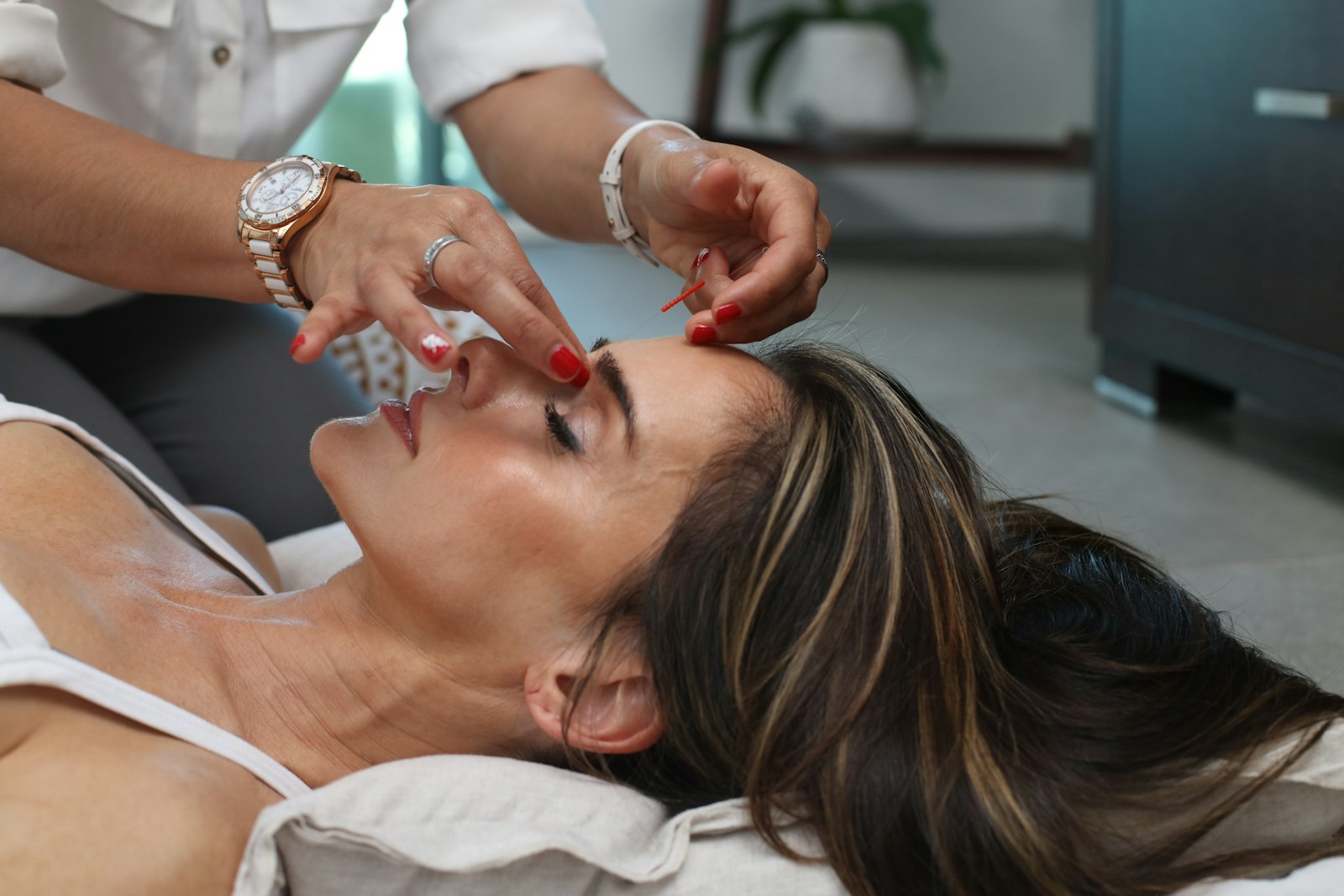
Beautiful skin is not a surface. It's a structure — and the research that transformed modern aesthetics is really the science of the scaffold underneath.
We talk about skin as though it were a finish, a coat of paint to be smoothed and brightened. The science tells a different story. Skin is the body's largest organ and its most honest ledger, and what we read as firmness, tone, and youth is really the state of the extracellular matrix beneath the surface — the collagen-and-elastin scaffold that holds everything taut. Firmness is architecture. And architecture can be studied.
The collagen conversation
Collagen makes up roughly a third of the body's protein and the bulk of the skin's structural framework. As that framework changes over time, the surface changes with it. This is why the most researched cosmetic peptides in the world are studied not for what they do to the surface, but for how they signal the matrix beneath it.
GHK-Cu — a copper-binding tripeptide — is among the most extensively studied molecules in all of aesthetic science, examined for its role in remodeling the extracellular matrix. AHK-Cu, a related copper peptide, appears in follicle and micro-vascular research. Copper peptides, in other words, are the foundation on which modern peptide skincare was built.
Targeted signals
SNAP-8, an eight–amino-acid sequence, is researched for its interaction with the signaling involved in expression-line formation — a precise, targeted question rather than a broad claim. The GLOW protocols (GLOW 50 and GLOW 70) combine repair-oriented and copper peptides frequently studied together in aesthetic research contexts, a stacking approach that mirrors how the underlying biology overlaps.
Pigment and the melanocortin system
Not all aesthetic research concerns structure. Melanotan II is studied for its interaction with the melanocortin system that governs pigmentation — a distinct pathway, and one presented here, like everything on this site, strictly for research context with no representation of safety or cosmetic outcome.
The aesthetic research shelf
Compounds studied within matrix, follicle, and pigmentation research. Educational only — not a protocol, not a recommendation for use.
The lesson worth carrying away is one of respect for the depth of the thing. Beauty, at the level the research actually operates, is not cosmetic in the dismissive sense. It is structural biology — and it rewards those who understand it as such.
Study the scaffold. The surface follows.